
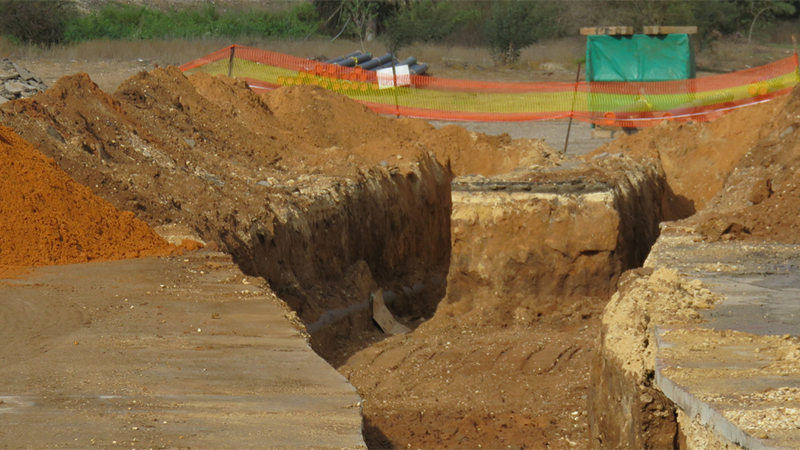
Unstable soil can turn a routine excavation into a high-risk job in minutes. When the ground cannot hold its shape, trenches can slough, walls can cave, and heavy equipment can lose stable footing. Water makes the problem worse by adding weight, reducing friction between particles, and turning fine soils into slick layers that slide. Even dry conditions can be dangerous when soil has been previously disturbed, filled, or layered unevenly over time. Excavating contractors build their procedures around one core goal: keep people, structures, and equipment safe while still achieving the required grades and compaction. That means planning for what the soil might do, not only what it looks like at first glance. A professional approach uses observation, testing, protective systems, and step-by-step sequencing to keep the work under control. When unstable soil is identified early, crews can select the right methods and avoid rushed decisions that often lead to incidents.
Safe steps from assessment to backfill
- Site assessment and early warning signs
Contractors start by gathering as much information as possible before digging begins. They review plans, locate utilities, and check any available geotechnical notes, drainage history, or prior site work records. On arrival, they look for surface clues that suggest instability, such as standing water, seepage lines, soft spots that rut under a boot, or soil that crumbles into loose grains when handled. Nearby structures matter too, because foundations, retaining walls, and pavements can change how loads transfer into the excavation zone. Contractors also note access paths for equipment, since unstable soil can create rollover hazards if the ground cannot support tracks or tires. During this stage, crews often perform simple field checks, such as probing with a rod, hand-augering, or taking small test cuts, to determine whether the soil stands or immediately slumps. If the soil shows layered behavior, such as a firm crust over soft material, contractors treat it as a warning that the excavation face could fail without notice. They also watch for vibration sources, such as traffic or compactors, because vibration can trigger movement in loose granular soils. The assessment output is a plan for slopes, protective systems, water control, and the staging of spoils and equipment.
- Planning protective systems before the bucket drops
A key procedure for unstable soil is to decide on protection methods before excavation reaches a depth where collapse becomes possible. Contractors choose between sloping, benching, shoring, and shielding based on soil behavior, depth, space constraints, and nearby loads. In tight areas where there is no room to slope back safely, trench boxes or hydraulic shoring may be required to prevent sidewall failure. Contractors also control surcharge loads by keeping spoil piles, materials, and equipment a safe distance from the excavation edge so their weight does not push soil inward. Access and egress are planned too, with ladders positioned so workers can exit quickly without climbing unstable faces. When work involves wastewater lines or drain fields, soil stability becomes even more important because excavations may be long, shallow, and spread across a property. Many owners researching Septic Installation Services offered by Bruce Johnson Construction learn that good excavation planning includes soil safety steps like controlled trench widths, stable bedding zones, and strict spoil placement to reduce wall pressure. Planning also covers communication, such as who can enter the excavation, who inspects protective systems, and how conditions will be rechecked after rain or overnight moisture changes. This planning stage prevents reactive choices when the soil begins to move.
- Water management and ground improvement procedures
Unstable soil often goes hand in hand with water, so excavation procedures prioritize water control rather than treating it as an afterthought. Contractors may divert surface runoff with berms or temporary swales, and they may use sump pits and pumps to keep the cut dry. Dewatering can also involve well points or temporary drainage layers when groundwater is high or when seepage is constant. Keeping the excavation dry is not only about convenience, because water in the trench can weaken soil and hide cracks or undercutting at the base. Contractors also stabilize the subgrade when it is too soft to support pipes, footings, or equipment. That can include overexcavating the weak layer and replacing it with compacted gravel, using geotextile fabric to separate soft soils from structural fill, or adding crushed stone to create a working platform. In clay soils that smear and lose strength when wet, crews may limit equipment passes and stage work so open cuts are exposed for less time. If the soil is highly variable, contractors may take additional samples during excavation to confirm that what they are seeing matches expectations. These procedures reduce the chance of settlement later and make it safer to install utilities, tanks, or foundations without the trench changing shape unexpectedly.
Safer digging starts with steady decisions.
Handling unstable soil conditions is less about speed and more about disciplined procedures that anticipate change. Excavating contractors begin with careful site assessment, noting water, disturbed ground, nearby loads, and soil behavior during small test cuts. They choose protection methods early, using sloping, shoring, or trench shielding while controlling spoils and equipment distances to reduce edge pressure. Water management procedures prevent further weakening of excavations, and ground improvement measures such as overexcavation, gravel replacement, and geotextile separation create stable working surfaces. During construction, sequencing and monitoring keep risks visible, with crews watching for cracks, bulging, or sloughing and adjusting the plan before a collapse develops. Finally, controlled backfilling and compaction help keep the site stable after installation is complete, reducing settlement and water accumulation that can undermine the work later. When these steps are followed consistently, unstable soil becomes a managed condition rather than an unpredictable threat, and the project moves forward with fewer surprises and a safer work zone for everyone involved.
