
Heavy wind can damage a roof in obvious and hidden ways, often not apparent until the next rain. A few missing shingles may be easy to spot from the yard, yet wind can also lift shingle edges, loosen fasteners, crack sealant at flashing, or bend metal details just enough to create a slow leak later. Gusts can drive debris across the surface, scraping granules and shortening shingle life without tearing anything off. On older roofs, wind stresses brittle materials and can turn small weaknesses into larger failures, especially at edges and corners where uplift forces are highest. Roofing contractors inspect after wind exposure to identify both immediate hazards and early warning signs that could lead to interior damage. A complete inspection focuses on the roof system as a whole, including the outer covering, flashing, decking behavior, and attic evidence of water entry. This careful approach helps homeowners decide what needs repair now and what should be monitored.
What contractors check after wind
- Safety setup and the first visual survey
The inspection begins with safety and a broad assessment of the ground before anyone steps onto the roof. Contractors look for downed branches, loose gutters, displaced ridge caps, and shingle sections that appear misaligned or wrinkled. They also scan the yard for shingle tabs, nails, or granules near downspouts, since these signs often indicate uplift and abrasion. Binoculars help identify lifted corners, missing hip or ridge pieces, and exposed underlayment. During this initial survey, contractors pay attention to roof geometry because valleys, dormers, and intersecting planes create turbulence that concentrates wind forces. Edge zones are given extra attention because rakes and eaves experience strong uplift, and starter strips can be peeled back if adhesive seals have weakened. If the wind event was accompanied by rain, contractors may ask about interior leaks, ceiling stains, or damp odors, since water intrusion can occur even without visible shingle loss. They also note any rooftop accessories, such as satellite mounts or solar standoffs, that could have loosened under vibration. This first pass helps determine whether the roof can be walked safely, whether a drone view is safer, or whether certain areas need temporary securing before a full surface inspection can proceed.
- Close-up roof-surface checks for lift and creasing.
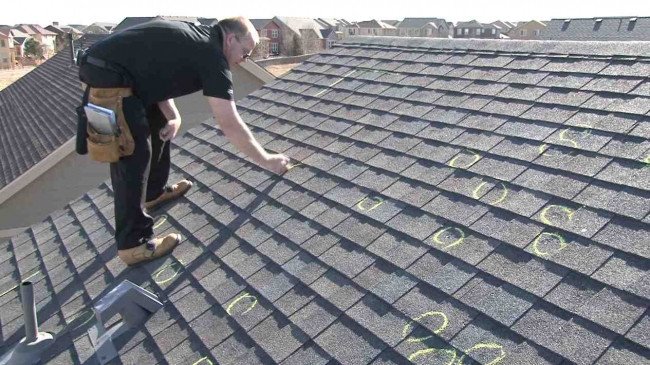
Once access is safe, contractors perform a methodical surface inspection, moving in a pattern that avoids stepping on fragile edges. The key wind-related defect on asphalt shingles is lifted tabs that have lost their seal. Even if the shingle settles back down, the adhesive bond may be broken, making the tab easier to lift in the next storm. Contractors gently test for seal integrity and look for creases near the shingle nail line, which can form when a shingle is bent upward and then snapped back down. Creasing is a major concern because it can lead to cracking and water entry. They also look for missing granules in streaks or patches that suggest debris scouring, and they check whether nails have backed out or become exposed. For homes in St. Charles, contractors often pay close attention to edge courses and ridge caps after gusty weather because wind patterns around open areas and neighborhood corridors can increase uplift at those locations. Metal components are inspected as well, including drip edge, valley metal, and any roof-to-wall flashing, because wind can flex these pieces and open small gaps at laps. The surface check includes penetrations such as plumbing vents and furnace flues, where rubber boots can tear or clamps can loosen, creating leaks that may not show up until later. By the end of this stage, contractors can identify repairs that reduce near-term leak risk and prevent additional shingle loss.
- Flashing, edges, and mechanical attachments under stress
Wind damage often occurs at transitions rather than in the middle of a roof plane. Contractors inspect step flashing along walls, chimney flashing, skylight curbs, and any counterflashing because wind can lift and vibrate these assemblies, breaking sealant beads or loosening fasteners. If caulking has cracked or pulled away, water can still enter, even if the shingles look intact. Ridge vents and soffit intake systems are also checked because wind can dislodge vent covers, tear screens, or drive debris into openings, which can restrict airflow and increase attic moisture later. Gutters, fascia, and rake boards are evaluated because wind can pull the gutters loose and expose the roof edge to water running behind the metal. If a roof has architectural features like dormers or parapets, contractors look for uplift damage where flashing changes direction or where water can be driven sideways during storms. Mechanical attachments on the roof, such as pipe supports, satellite mounts, or HVAC lines, are checked for movement because even slight shifting can cause holes to form around fasteners. In some cases, contractors may recommend adding or restoring fastener patterns in vulnerable areas if previous work was under-nailed or if shingles were installed without proper sealing conditions. These details matter because wind tends to exploit the weakest joint, and stopping small gaps early reduces the chance of decking wetting and hidden rot.
A careful inspection prevents hidden leaks.
After heavy wind, a roofing contractor’s inspection focuses on both visible damage and subtle failures that can lead to leaks later. The process usually begins with a ground-level survey for missing materials and displaced edges, followed by a close-up roof walk that checks seal integrity, creasing near nail lines, granule loss, and exposed fasteners. Contractors then concentrate on high-stress zones such as eaves, rakes, ridges, valleys, and roof-to-wall transitions, where flashing laps and sealants can separate under vibration. Attic checks add another layer by confirming whether wind-driven rain entered through small gaps around vents, chimneys, or ridge components. Clear documentation and prioritized recommendations help homeowners act quickly on urgent risks and plan repairs that reduce the risk of repeat loss in the next storm cycle. When inspections are conducted with this level of detail, small wind-related defects can be corrected before they become larger interior repairs, keeping the roof more reliable for the rest of the season.
